
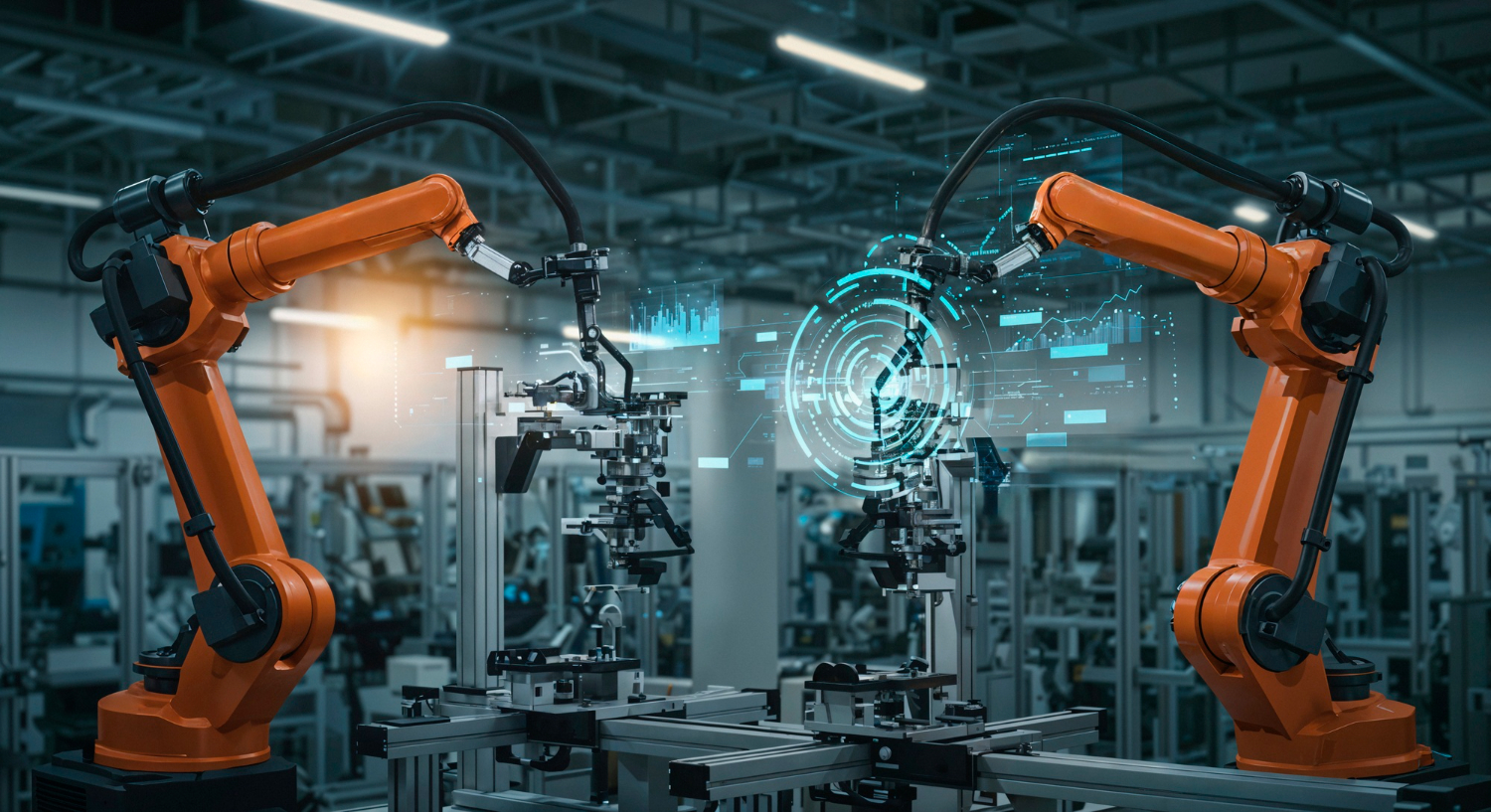
The UAE is moving rapidly toward smarter, more connected, and technology-driven operations. Automation is no longer limited to large manufacturing plants. Today, businesses across industrial, commercial, energy, logistics, and building sectors are using connected control systems to improve productivity, monitor equipment, reduce operational waste, and make faster decisions.
This growing transformation is creating strong demand for an Automation Solution in UAE that combines proven control technologies with modern capabilities such as IoT, artificial intelligence, real-time analytics, and predictive maintenance.
The UAE’s Ministry of Industry and Advanced Technology has made Industry 4.0 a key part of its industrial transformation agenda, with a focus on productivity, digital maturity, sustainability, and advanced technology adoption.
What Is an Automation Solution?
An automation solution is a combination of hardware, software, communication systems, and control technologies designed to operate or monitor processes with less manual intervention.
Depending on the application, an automation system can include:
- Programmable Logic Controllers (PLCs)
- Human-Machine Interfaces (HMIs)
- Variable Frequency Drives (VFDs)
- Industrial sensors
- SCADA systems
- Control panels
- Industrial robots
- Industrial IoT devices
- Energy monitoring systems
- Building automation controls
Rather than simply replacing manual tasks, modern automation connects different parts of an operation so that businesses can monitor performance and respond to changing conditions more effectively.
Why Automation Is Becoming Important in the UAE
The UAE is actively encouraging industrial digitalization and advanced technology adoption. Its Industry 4.0 programme focuses on automating processes, integrating value chains, improving productivity, reducing waste, saving energy, and supporting sustainable industrialization.
In May 2026, the Ministry of Industry and Advanced Technology also announced a partnership aimed at accelerating the use of AI, robotics, and Industry 4.0 technologies across UAE manufacturing. The initiative includes practical technology roadmaps and implementation for manufacturers.
This direction shows why businesses are looking beyond basic automation toward connected and data-driven systems.
Key Benefits of Automation Solutions
1. Improve Operational Efficiency
Automation can perform repetitive processes consistently while allowing employees to focus on supervision, analysis, and higher-value activities.
For manufacturing facilities, automated controls can coordinate machines, production sequences, sensors, and drives to improve process consistency.
2. Reduce Unnecessary Energy Consumption
Automation can monitor how equipment uses energy and adjust operation according to actual demand.
For example, automated HVAC controls, motor speed regulation, lighting controls, and energy monitoring can help facilities identify and reduce unnecessary consumption.
3. Minimize Equipment Downtime
Unexpected equipment failure can affect production schedules and operating costs. Sensors and monitoring systems can identify unusual temperature, vibration, current, pressure, or performance patterns.
This creates an opportunity for businesses to move from purely reactive maintenance toward more proactive maintenance planning.
4. Improve Accuracy and Consistency
Automated systems can follow predefined operating parameters consistently. This is particularly valuable in applications where variations in timing, temperature, pressure, speed, or production sequences can affect product quality.
5. Enable Real-Time Monitoring
Modern automation gives operators visibility into equipment and processes through dashboards, HMIs, SCADA platforms, and connected devices.
Instead of waiting for a problem to become visible, facility teams can monitor important operating parameters continuously.
Where Can Automation Be Used?
An Automation Solution in UAE can be designed for a wide range of applications.
Manufacturing
Factories can automate production lines, machine controls, material handling, quality monitoring, and production data collection.
Building Automation
Commercial buildings can integrate HVAC, lighting, energy monitoring, access control, and other systems through centralized building automation platforms.
Energy Management
Businesses can use automated meters and sensors to understand consumption patterns and identify opportunities for energy optimization.
Water and Utilities
Automation can monitor pumps, flow, pressure, tank levels, and other utility processes while reducing unnecessary manual intervention.
Warehousing and Logistics
Robotics, automated material handling, sensors, and software can work together to improve inventory movement and warehouse efficiency.
AI and IoT Are Changing Automation
The latest generation of automation is moving beyond fixed programming.
Industrial IoT (IIoT) allows machines, sensors, controllers, and software platforms to exchange data. AI and machine learning can then be used to identify patterns, detect anomalies, and support operational decisions.
The UAE’s Industry 4.0 initiatives specifically highlight technologies such as AI, IoT, machine learning, and predictive maintenance as part of the digital transformation of manufacturing.
This does not mean every business needs a complex AI system. The right technology depends on the actual operational problem. A well-designed automation project should begin with business requirements and then select the technology that delivers measurable value.
How to Choose an Automation Partner in the UAE
Before investing in an Automation Solution in UAE, businesses should evaluate several factors:
- Existing machines and control systems
- Required level of automation
- Electrical and communication infrastructure
- Production requirements
- Energy consumption
- Safety considerations
- Scalability
- Integration with existing systems
- Maintenance and technical support
A professional automation assessment can help identify where automation will provide the greatest operational value.
The Future of Automation in UAE
Automation in the UAE is moving toward connected factories, intelligent buildings, predictive maintenance, robotics, digital twins, and real-time analytics.
Recent UAE initiatives have also highlighted autonomous warehouse operations and digital-twin environments as examples of how robotics, software, and real-time decision-making can work together.
The direction is clear: automation is becoming less about individual machines and more about creating connected ecosystems where equipment, software, data, and people work together.
An Automation Solution in UAE can help businesses improve productivity, enhance equipment monitoring, control energy consumption, reduce operational interruptions, and build a stronger foundation for digital transformation.
The most effective automation strategy is not about automating everything. It is about identifying the processes that need better control, visibility, efficiency, or reliability and implementing the right technology around those requirements.
With the UAE continuing to support Industry 4.0, AI, robotics, IoT, and advanced manufacturing, businesses that develop a practical automation roadmap can prepare their operations for a more connected and data-driven future.