
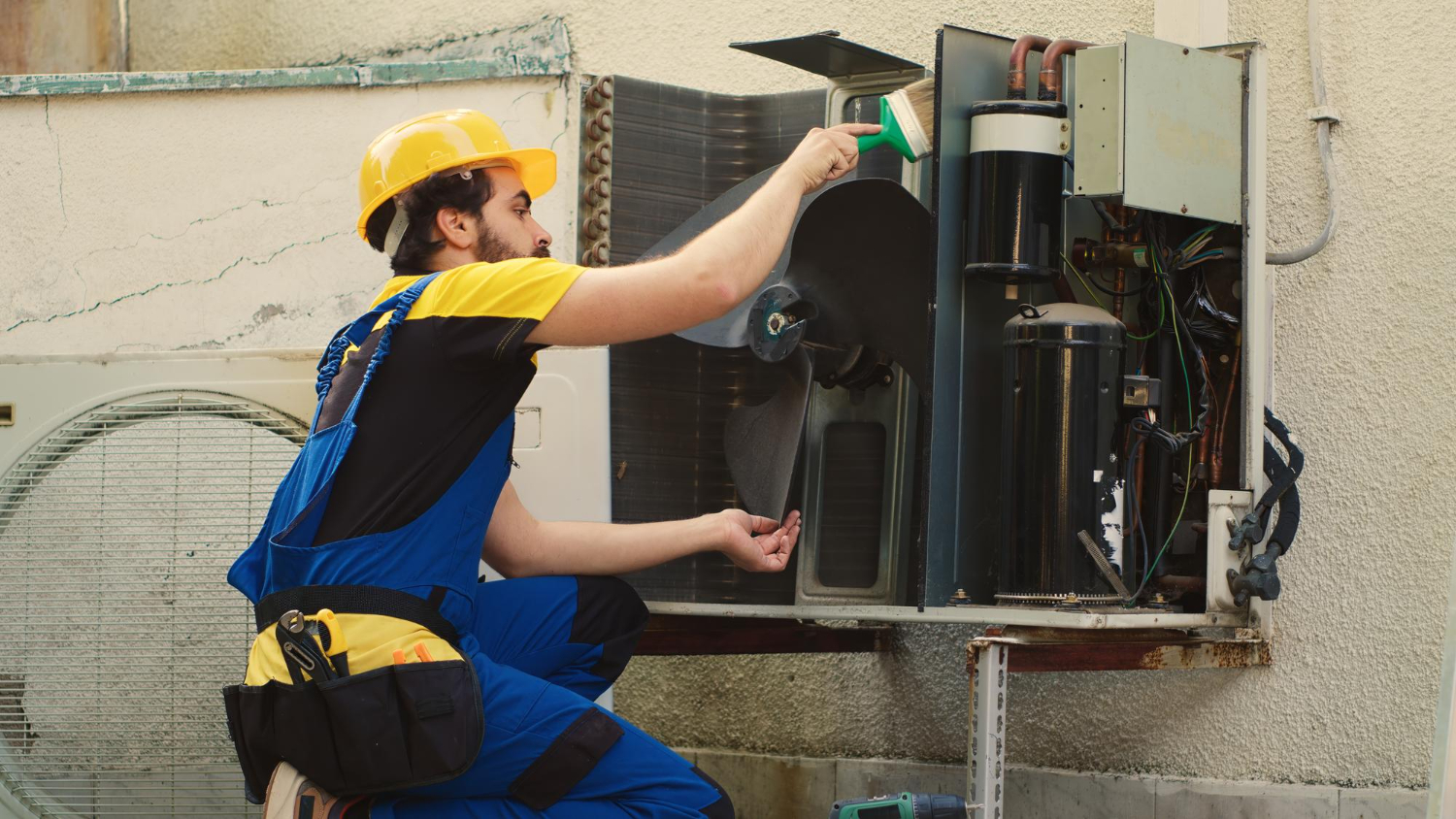
Dubai’s climate creates a unique challenge for buildings that need reliable temperature control throughout the year. Air conditioning is essential, while hot water production can also account for a significant share of energy consumption. As businesses and property owners look for more efficient HVAC technologies, the Heat Pump System in Dubai is becoming an increasingly attractive solution. Heat pump technology can transfer heat rather than generate it directly, allowing the same basic principle to be used for heating, cooling, and hot water applications. With the right system design, heat pumps can help improve energy efficiency while providing dependable temperature control.
What Is a Heat Pump System?
A heat pump is an HVAC system that transfers thermal energy from one location to another. Instead of creating heat through direct combustion or electrical resistance, it uses a refrigeration cycle to move heat. Depending on the system configuration, a heat pump can provide:
- Space cooling
- Space heating
- Domestic hot water
- Pool heating
- Commercial hot water
- Temperature control for selected industrial applications
This versatility makes heat pumps useful for residential, commercial, hospitality, healthcare, and other facilities.
Why Are Heat Pump Systems Relevant in Dubai?
Dubai has a hot climate and high cooling demand for much of the year. At the same time, many properties require hot water for bathrooms, kitchens, hotels, restaurants, healthcare facilities, and other applications. A properly selected Heat Pump System in Dubai can use energy more efficiently by transferring available heat instead of relying entirely on conventional electric heating. For facilities with continuous hot-water requirements, this can be particularly valuable.
How Does a Heat Pump Work?
A heat pump uses a refrigeration cycle involving components such as:
- Evaporator
- Compressor
- Condenser
- Expansion valve
- Refrigerant
During operation, the system absorbs heat from a source and transfers it to another location. For cooling, heat is removed from the indoor or process environment and rejected outside. For heating or hot-water production, the system operates to transfer heat into the required space or water system. The ability to move heat in this way is what makes heat pump technology different from conventional electric heating systems.
Types of Heat Pump Systems
Different properties require different heat pump configurations. Common types include:
Air Source Heat Pumps
Air source heat pumps extract or reject heat through outdoor air. They are widely used for building HVAC and hot-water applications.
Air-to-Water Heat Pumps
These systems transfer heat between outdoor air and a water-based heating or hot-water circuit. They can be suitable for domestic hot water and selected commercial applications.
Water Source Heat Pumps
Water source systems use a water loop or suitable water source as the thermal exchange medium. They can be considered where site conditions support their installation.
Heat Pump Water Heaters
These systems are designed primarily for hot-water production. They can be useful in hotels, residential developments, restaurants, staff accommodation, and commercial properties with significant hot-water demand.
Benefits of a Heat Pump System in Dubai
Improved Energy Efficiency
Heat pumps transfer heat rather than producing it directly. This can result in lower energy consumption compared with some conventional heating technologies, depending on operating conditions and system design.
Heating and Cooling Capability
Certain heat pump systems can provide both heating and cooling, offering greater flexibility from a single technology platform.
Efficient Hot-Water Production
Heat pump water heaters can be an efficient option for properties that require substantial amounts of hot water throughout the day.
Lower Operating Costs
Energy savings can translate into reduced operating costs over the system’s useful life. Actual savings depend on the system efficiency, operating conditions, electricity tariffs, maintenance, and usage patterns.
Reduced Environmental Impact
Lower energy consumption can also help reduce the carbon footprint associated with building operations, particularly when electricity is generated from lower-carbon sources.
Where Can Heat Pumps Be Used in Dubai?
Heat pump technology can be considered for a wide range of applications, including:
- Villas and residential buildings
- Hotels and resorts
- Restaurants
- Hospitals and healthcare facilities
- Schools and educational buildings
- Offices
- Commercial buildings
- Swimming pools
- Staff accommodation
- Sports and fitness facilities
- Industrial facilities
The appropriate heat pump type and capacity depend on the property’s specific heating, cooling, and hot-water requirements.
Heat Pump Systems for Hotels and Hospitality
Hotels have significant hot-water requirements for guest rooms, kitchens, laundry, spas, and other facilities. A well-designed heat pump solution can support hot-water production while helping manage energy consumption. Systems can also be integrated with storage tanks and existing hot-water infrastructure. For large hospitality projects, engineers should evaluate the daily hot-water demand, peak loads, water temperatures, available plant-room space, and system redundancy requirements before selecting equipment.
Heat Pump Water Heating for Commercial Buildings
Commercial buildings can have consistent hot-water requirements depending on their occupancy and operations. A heat pump water heating system can be designed around the building’s hot-water demand and integrated with storage systems. This approach may be particularly useful where hot-water consumption is high and continuous.
What Should You Consider Before Installing a Heat Pump?
Selecting a heat pump should involve more than simply choosing equipment based on capacity. Important factors include:
1. Heat Load
The required heating or hot-water capacity should be calculated based on actual building requirements.
2. Ambient Conditions
Outdoor temperatures can affect heat pump performance. Equipment should be selected according to the expected operating conditions in Dubai.
3. Water Temperature Requirements
Hot-water applications may require different temperature levels. The selected heat pump must be capable of meeting the required conditions.
4. System Location
Outdoor units require suitable ventilation and adequate installation clearance.
5. Existing HVAC Infrastructure
Heat pumps may be integrated with existing HVAC, hot-water storage, pumps, controls, and distribution systems depending on the project.
6. Controls and Monitoring
Modern systems can incorporate smart controls and monitoring to help optimise performance and identify operating issues.
Heat Pump Installation in Dubai
Professional installation is important for achieving reliable performance. A typical installation process may include:
- Site assessment
- Load calculation
- Equipment selection
- System design
- Hydraulic and electrical planning
- Equipment installation
- Pipework and insulation
- Control integration
- Testing and commissioning
- Performance verification
The installation should comply with applicable local requirements and the manufacturer’s technical specifications.
Heat Pump Maintenance
Regular maintenance helps maintain efficiency and reliability. Depending on the system, maintenance can include:
- Checking refrigerant-related components
- Cleaning heat exchangers
- Inspecting filters
- Checking pumps and valves
- Inspecting electrical connections
- Testing control systems
- Checking water circulation
- Inspecting insulation
- Monitoring operating temperatures
- Checking for abnormal noise or vibration
Preventive maintenance can also help identify developing problems before they result in unexpected downtime.
Heat Pumps vs Conventional Heating
Traditional electric heating systems convert electrical energy directly into heat. A heat pump instead transfers heat using a refrigeration cycle. This difference can make heat pumps more energy-efficient in suitable applications. However, actual performance depends on factors such as ambient conditions, required output temperature, equipment efficiency, system design, and operating profile. Therefore, a proper technical assessment should be completed before making an investment decision.
Is a Heat Pump Suitable for Every Property?
Not necessarily. A heat pump should be selected according to the property’s specific requirements. Factors such as available space, required temperature, peak demand, existing infrastructure, outdoor conditions, water storage capacity, and operating schedule can influence the final design. For some applications, a hybrid or integrated solution may provide better overall performance than using a heat pump alone.
Why Professional Heat Pump Services Matter
Correct system sizing and installation are essential for long-term performance. An oversized or incorrectly configured system may operate inefficiently, while an undersized system may struggle to meet peak demand. Professional heat pump services can include:
- Heat pump consultation
- Load assessment
- System design
- Equipment supply
- Heat pump installation
- Hot-water system integration
- Control integration
- Testing and commissioning
- Preventive maintenance
- Troubleshooting and repair
Choose an Energy-Efficient Heat Pump System in Dubai
As Dubai’s buildings continue to focus on energy efficiency and smarter HVAC technologies, heat pumps offer an efficient approach to heating, cooling, and hot-water requirements. A properly designed Heat Pump System in Dubai can provide reliable performance while supporting energy-efficient building operation. Whether the requirement is for a villa, hotel, commercial building, healthcare facility, swimming pool, or industrial application, the system should be selected based on actual load requirements and site conditions. Before installation, work with qualified HVAC professionals to evaluate the application, calculate the required capacity, and determine the most suitable heat pump configuration for long-term performance.