
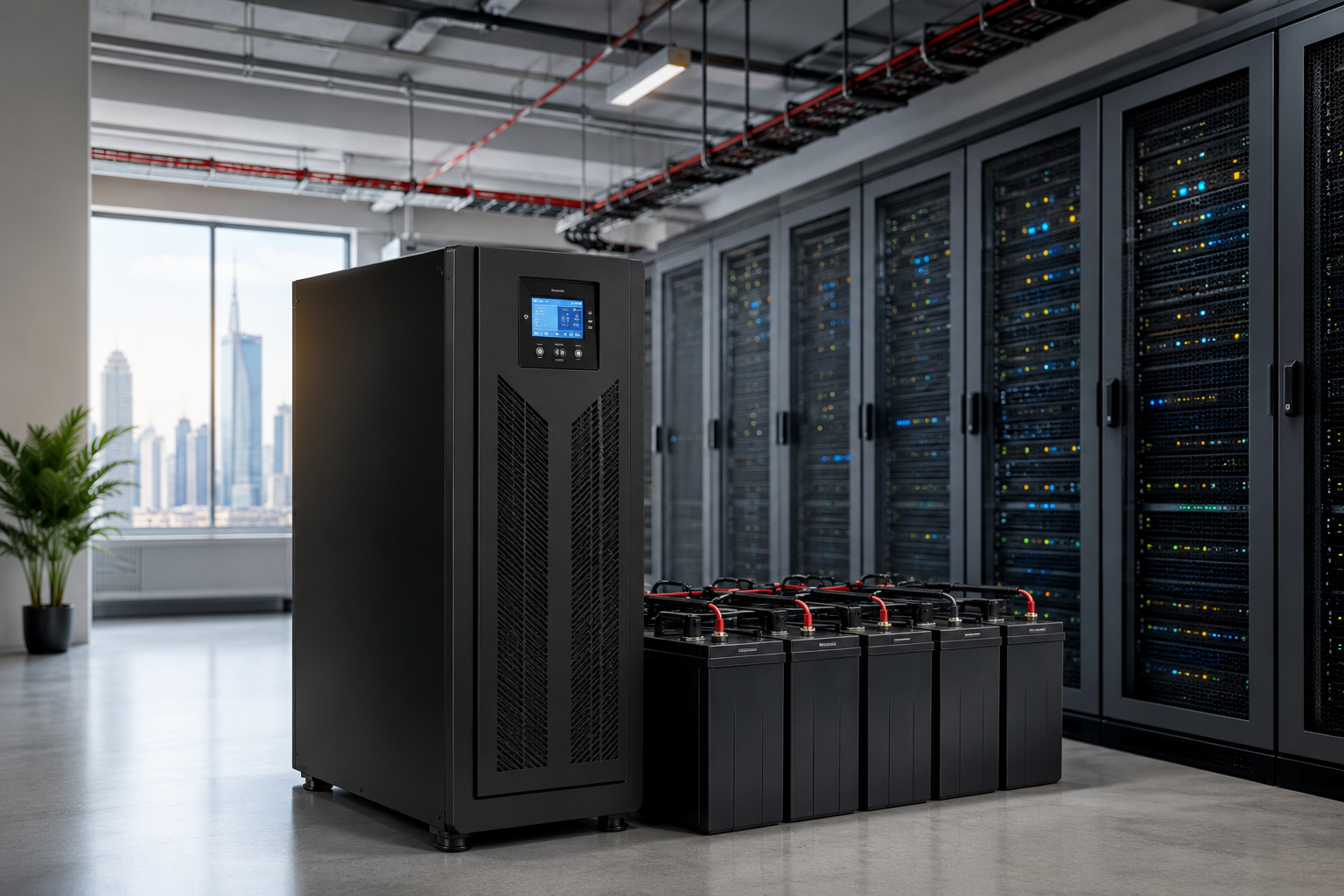
Reliable electricity is essential for modern businesses. In the UAE, offices, hospitals, data centers, hotels, retail facilities, factories, and commercial buildings depend on electrical equipment throughout the day. Even a short power interruption can affect operations, damage sensitive equipment, or cause data loss.
This is why an Uninterrupted Power Supply in UAE is an important part of modern power protection. A UPS provides backup power immediately when the main supply fails while also helping protect connected equipment from certain electrical disturbances.
What Is an Uninterrupted Power Supply?
An Uninterruptible Power Supply, commonly called a UPS, is a backup power system that provides temporary electricity to connected equipment when the primary power source becomes unavailable or unstable.
Unlike a conventional generator, a UPS can respond almost instantly to a power interruption. Depending on the system design and battery capacity, it can keep essential equipment operating until the main supply returns or another backup source takes over.
Modern UPS systems can also provide functions such as voltage regulation, power conditioning, monitoring, and controlled shutdown.
Why Businesses in the UAE Need UPS Protection
The UAE has a highly developed power infrastructure. However, businesses still need protection against unexpected interruptions, voltage fluctuations, electrical disturbances, and equipment failures.
For a company operating critical digital or industrial systems, downtime can be expensive.
An Uninterrupted Power Supply in UAE can help businesses maintain continuity for important equipment such as:
- Servers and networking equipment
- Data centre infrastructure
- Medical equipment
- Security systems
- Industrial automation systems
- Communication equipment
- POS and retail systems
- Building management systems
- Control panels and monitoring equipment
The right UPS solution provides an additional layer of protection between the electrical supply and critical loads.
Key Benefits of a UPS System
1. Continuous Backup Power
The primary purpose of a UPS is to provide immediate backup power when the main supply is interrupted. This helps prevent sudden shutdowns of essential equipment.
2. Protection for Sensitive Equipment
Modern electronic equipment can be affected by voltage fluctuations, surges, and other power-quality problems. A suitable UPS can help deliver cleaner and more stable power to connected loads.
3. Reduced Downtime
Unexpected downtime can interrupt production, communication, transactions, and business services. UPS backup gives organizations valuable time to maintain operations or safely switch to another power source.
4. Data Protection
Servers and computer systems can lose unsaved information or become vulnerable to data corruption following an unexpected shutdown. UPS systems help provide the time needed for systems to remain operational or shut down properly.
5. Better Business Continuity
For organizations where electricity is critical to daily operations, UPS technology supports a wider business-continuity strategy. It can work alongside generators and other backup systems to provide layered power protection.
Choosing the Right UPS for Your Facility
There is no single UPS system suitable for every business. The right solution depends on the electrical load, equipment sensitivity, required backup time, available space, and future expansion plans.
Common UPS configurations include:
Standby UPS: Generally suitable for basic applications where simple backup protection is required.
Line-interactive UPS: Provides additional voltage regulation and is suitable for many small and medium-sized applications.
Online UPS: Continuously conditions the power supplied to connected equipment and is commonly selected for critical applications that require a high level of power protection.
A professional assessment can determine the appropriate capacity and configuration for your facility.
UPS Applications Across the UAE
An Uninterrupted Power Supply in UAE can support a wide range of sectors.
Data centres require continuous power to protect servers, networking infrastructure, and stored information.
Healthcare facilities depend on reliable electricity for critical medical and monitoring equipment.
Manufacturing plants can use UPS systems to protect automation controls, PLCs, instrumentation, and other sensitive systems.
Commercial buildings use UPS solutions for security, communication, IT, access control, and building automation equipment.
Hotels and retail businesses can protect payment systems, servers, communication systems, and other essential equipment from unexpected interruptions.
Why UPS Maintenance Matters
Installing a UPS is only the beginning. Batteries and other components require regular inspection and maintenance to ensure the system performs when it is needed.
Professional UPS maintenance may include battery condition checks, electrical inspections, system testing, alarm verification, load assessment, and performance monitoring.
Battery condition is particularly important because batteries naturally lose capacity over time. Identifying deterioration early can help prevent unexpected backup failures.
The Future of UPS Technology
UPS technology is becoming increasingly intelligent. Modern systems can connect to monitoring platforms and provide information about battery health, load levels, temperature, system status, and potential faults.
Advanced monitoring can also support predictive maintenance, helping facility teams identify problems before they become major failures.
Energy efficiency is another important consideration. Modern UPS systems are designed to operate efficiently under different load conditions, helping organizations balance reliability with responsible energy management.
An Uninterrupted Power Supply in UAE is more than a backup battery system. It is an important component of a reliable electrical infrastructure, protecting critical equipment and helping businesses maintain continuity when unexpected power problems occur.
From offices and data centers to hospitals and industrial facilities, choosing the right UPS system can reduce downtime, protect valuable equipment, and improve overall power resilience. With professional design, installation, monitoring, and maintenance, businesses can build a dependable power-protection strategy that is ready for both today’s requirements and future growth.