Harmonic Studies in UAE: Improving Power Quality and Electrical System Performance

Modern commercial and industrial facilities depend on increasingly sophisticated electrical equipment. Variable frequency drives, UPS systems, solar inverters, LED lighting, data-centre equipment, and other power-electronic loads can introduce harmonic distortion into an electrical network.
This is why
Harmonic Studies in UAE are an important part of electrical system design, power-quality assessment, and troubleshooting. A detailed harmonic study helps engineers understand distortion levels, identify potential risks, and determine suitable mitigation measures before power-quality problems affect equipment or operations.
What Is a Harmonic Study?
A harmonic study is an engineering analysis used to evaluate harmonic currents and voltages within an electrical power system.
Ideally, an AC voltage or current waveform follows a clean sinusoidal shape. Non-linear electrical loads can distort this waveform by generating harmonic components at multiples of the fundamental frequency.
In the UAE, DEWA’s electrical installation regulations identify several potential sources of harmonics, including variable speed drives, variable frequency drives, capacitor banks, UPS systems, lighting equipment, and electronic power supplies.
A harmonic study examines how these sources affect the electrical network and whether the resulting distortion remains within applicable power-quality requirements.
Why Are Harmonic Studies Important in the UAE?
Electrical systems in UAE commercial, industrial, and infrastructure facilities can contain a high concentration of electronic and power-electronic equipment.
Excessive harmonic distortion may contribute to:
- Transformer overheating
- Increased cable losses
- Capacitor bank stress
- Nuisance tripping
- Reduced equipment efficiency
- Communication interference
- Poor power quality
- Additional electrical losses
- Premature equipment ageing
- Unexpected equipment shutdowns
A harmonic study helps identify these risks before they develop into costly operational problems.
DEWA regulations state that consumer loads should not cause supply-voltage characteristics to deviate beyond applicable requirements, including referenced standards such as BS EN 50160, IEC 61000, and ENA Engineering Recommendation G5/4-1.
What Causes Harmonics in Electrical Systems?
Harmonics are commonly associated with non-linear loads. Typical sources include:
Variable Frequency Drives
VFDs are widely used for controlling motors and improving energy efficiency. However, conventional drive configurations can produce harmonic currents that affect the upstream electrical network.
UPS Systems
UPS equipment protects critical loads from power interruptions, but its rectifier and power-electronic components can contribute to harmonic distortion depending on the system design.
Solar PV Inverters
Solar power systems use inverters to convert DC electricity into AC power. Harmonic performance therefore needs to be considered when connecting larger systems to the electrical network.
DEWA has specific harmonic-assessment procedures for Shams Dubai projects, including assessment of harmonic emissions from solar designs.
LED and Electronic Lighting
Modern lighting systems often use electronic drivers that can contribute to harmonic currents.
Data Centres and IT Equipment
Servers, computers, networking equipment, and other electronic loads can create non-linear current demand and increase harmonic distortion within a facility.
What Does a Harmonic Study Include?
A professional
Harmonic Studies in UAE assessment may include several stages.
1. Electrical System Data Collection
Engineers first collect information about the facility, including:
- Single-line diagrams
- Transformer ratings
- Cable specifications
- Generator details
- Motor loads
- VFDs
- UPS systems
- Capacitor banks
- Solar PV systems
- Existing harmonic filters
- Load profiles
Accurate system data is essential for producing a meaningful study.
2. Harmonic Measurement
Where an existing facility is being investigated, power-quality analysers can be used to measure voltage and current harmonics.
Measurements may include individual harmonic orders, total harmonic distortion, voltage levels, current levels, power factor, and other relevant power-quality parameters.
3. Electrical System Modelling
The electrical network can then be represented using appropriate power-system analysis software. Engineers can evaluate the behaviour of the system under different operating conditions.
4. Harmonic Analysis
The study evaluates harmonic distortion at important points within the network, such as transformers, main switchboards, distribution boards, and points of common coupling.
The analysis can help determine whether harmonic levels could create operational or compliance concerns.
5. Mitigation Recommendations
If excessive distortion is identified, engineers can assess suitable corrective measures.
Depending on the application, solutions may include:
- Passive harmonic filters
- Active harmonic filters
- Detuned capacitor banks
- Low-harmonic drives
- Active front-end drives
- Equipment configuration changes
- Load balancing
- System design modifications
The appropriate solution depends on the harmonic source, network configuration, operating conditions, and required performance.
Harmonic Studies and DEWA Requirements
Power quality is an important consideration when connecting electrical installations and distributed renewable-energy systems to the Dubai network.
DEWA’s current Distributed Renewable Resources Generators standards specify harmonic and interharmonic considerations for LV and MV connections. For MV-connected renewable systems, DEWA references IEC/TR 61000-3-6 for harmonics and interharmonics and performs a special harmonic evaluation at the network assessment stage.
DEWA’s current standards also state that, unless otherwise specified, supply-voltage THD should be no more than
8% for LV networks and 6.5% for MV networks in the referenced context.
These requirements demonstrate why harmonic analysis should be considered during electrical design rather than only after a power-quality problem occurs.
When Should You Conduct a Harmonic Study?
A harmonic study can be valuable during:
- New electrical system design
- Major facility expansion
- Solar PV integration
- Installation of large VFD systems
- UPS installation
- Industrial automation projects
- Data-centre development
- Capacitor-bank installation
- Power-quality investigations
- Equipment replacement
- Troubleshooting unexplained electrical problems
Conducting the analysis during the design stage can help identify potential issues before equipment is installed.
Benefits of Professional Harmonic Studies
A properly conducted study can help businesses:
- Improve electrical system reliability
- Protect sensitive equipment
- Reduce unnecessary electrical losses
- Identify harmonic sources
- Improve power quality
- Support electrical-system design decisions
- Select appropriate mitigation equipment
- Reduce the risk of unexpected downtime
- Support applicable power-quality requirements
More importantly, harmonic analysis provides engineers with technical information that can be used to make informed decisions about the electrical infrastructure.
Choose the Right Approach to Power Quality
As UAE facilities adopt more automation, renewable energy, digital equipment, and power-electronic systems, understanding harmonic behaviour is becoming increasingly important.
Harmonic Studies in UAE provide a structured way to evaluate electrical-system distortion, identify potential risks, and develop appropriate mitigation strategies. Whether you are designing a new facility, upgrading an existing electrical network, or investigating power-quality problems, a detailed harmonic assessment can support safer, more reliable, and more efficient electrical operation.
EnergySavers can support businesses with power-quality and electrical-system assessment requirements, helping identify practical solutions based on the characteristics of each facility and its operating conditions.
Building Management System in UAE: Smarter, More Efficient Buildings

Modern buildings in the UAE are becoming more connected, automated, and energy-conscious. From commercial offices and shopping malls to hotels, hospitals, residential towers, and industrial facilities, building owners are looking for better ways to manage energy consumption, indoor comfort, safety, and operational performance.
A
Building Management System in UAE provides a centralized approach to monitoring and controlling essential building systems. By connecting equipment, sensors, controllers, and monitoring platforms, a BMS can help facility teams understand how a building is operating and respond more efficiently.
What Is a Building Management System?
A Building Management System, commonly called BMS, is a centralized control and monitoring system used to manage different building services.
Depending on the building and its requirements, a BMS can monitor and control:
- Heating, ventilation, and air conditioning (HVAC)
- Chillers and cooling systems
- Lighting systems
- Electrical equipment
- Energy meters
- Pumps and motors
- Ventilation systems
- Temperature and humidity
- Indoor air quality
- Alarms and equipment status
- Other connected building services
The UAE government describes a BMS as a computer-based control system that can monitor and control mechanical and electrical equipment, including ventilation, lighting, power, fire systems, and security systems.
Why Is BMS Important in the UAE?
Energy management is particularly important for UAE buildings because cooling and other building services can represent a significant part of operational energy use. The UAE has also established energy-efficiency initiatives covering the built environment, while Dubai has implemented green-building requirements and energy-management measures.
A properly designed
Building Management System in UAE can provide better visibility into building performance and help facility teams identify inefficient operation.
Instead of operating individual systems separately, building operators can use centralized monitoring to understand equipment status, schedules, temperatures, energy consumption, and alarms.
Key Benefits of a Building Management System
1. Better Energy Management
A BMS can help monitor energy consumption across different building systems. Facility teams can use this information to identify unusual consumption patterns and optimize operating schedules.
For buildings focused on reducing energy waste, centralized monitoring can support more informed operational decisions.
2. Improved HVAC Control
HVAC systems are essential for maintaining comfortable indoor conditions in the UAE climate. A BMS can monitor temperatures, operating schedules, equipment status, and other parameters to help HVAC systems operate according to actual requirements.
This can reduce unnecessary operation while maintaining occupant comfort.
3. Centralized Monitoring
Without centralized monitoring, facility teams may need to check different systems individually. A BMS brings important information into a single interface.
This makes it easier to identify alarms, review system status, and respond to operational issues.
4. Predictive and Preventive Maintenance
BMS data can help maintenance teams recognize abnormal equipment behavior before it develops into a major operational problem.
When combined with sensors, analytics, and other smart technologies, building data can support condition monitoring and more proactive maintenance strategies. UAE industrial technology guidance also highlights sensors, smart meters, BMS, automated controls, and analytics as technologies that can support energy and utility optimization.
5. Enhanced Occupant Comfort
Temperature, ventilation, lighting, and indoor environmental conditions directly affect the experience of people using a building.
A properly configured BMS can help maintain more consistent environmental conditions by monitoring relevant parameters and adjusting connected systems when required.
BMS and UAE Energy-Efficiency Goals
The role of smart building technologies is becoming increasingly relevant as the UAE continues to focus on energy efficiency and sustainable development.
The UAE’s National Water and Energy Demand Management Programme includes the built environment among its key sectors and targets significant improvements in energy efficiency.
Dubai’s green-building requirements also include provisions related to metering, commissioning, central control, and building management systems. For certain new buildings, energy-consuming systems must be monitored and metered, while BMS or central monitoring systems can be connected to enable real-time energy profiling and management.
This makes BMS technology relevant not only for operational efficiency but also for buildings working toward better energy performance.
Where Can BMS Be Used?
A
Building Management System in UAE can be designed for different types of facilities, including:
- Commercial buildings
- Office towers
- Hotels and resorts
- Shopping malls
- Hospitals and healthcare facilities
- Schools and universities
- Residential buildings
- Industrial facilities
- Warehouses
- Data centers
- Government buildings
The system can be scaled according to the size, complexity, equipment, and operational requirements of the facility.
BMS and Smart Building Technology
Modern BMS solutions are moving beyond basic equipment control. Integration with IoT sensors, smart meters, automation platforms, analytics, and other digital technologies can provide deeper insight into building performance.
This creates opportunities for more intelligent energy management, automated responses, equipment monitoring, and data-driven facility operations.
For businesses in the UAE, the objective should not simply be to install automation. The system should be designed around measurable operational needs such as energy optimization, equipment reliability, occupant comfort, and improved visibility.
Choosing the Right BMS Solution
Every building has different requirements. Before implementing a BMS, businesses should consider:
- Existing HVAC and electrical infrastructure
- Building size and usage
- Energy consumption patterns
- Required monitoring points
- Existing automation systems
- Integration requirements
- Future expansion
- Maintenance and support requirements
- Energy-efficiency objectives
A properly planned solution can provide greater value than a system designed without considering the building’s actual operating conditions.
Build a Smarter and More Efficient Facility
A
Building Management System in UAE can help businesses gain better control over building operations while improving energy visibility, comfort, maintenance, and operational efficiency.
As UAE buildings continue moving toward smarter and more sustainable operations, BMS technology can become an important part of an integrated energy-management strategy. With the right design, installation, integration, and ongoing optimization, businesses can turn building data into practical improvements in day-to-day facility performance.
For organizations looking to improve building efficiency and automation, EnergySavers can help develop solutions based on the specific requirements of the facility.
Automation Solution in UAE: How Smart Automation Is Reshaping Modern Businesses
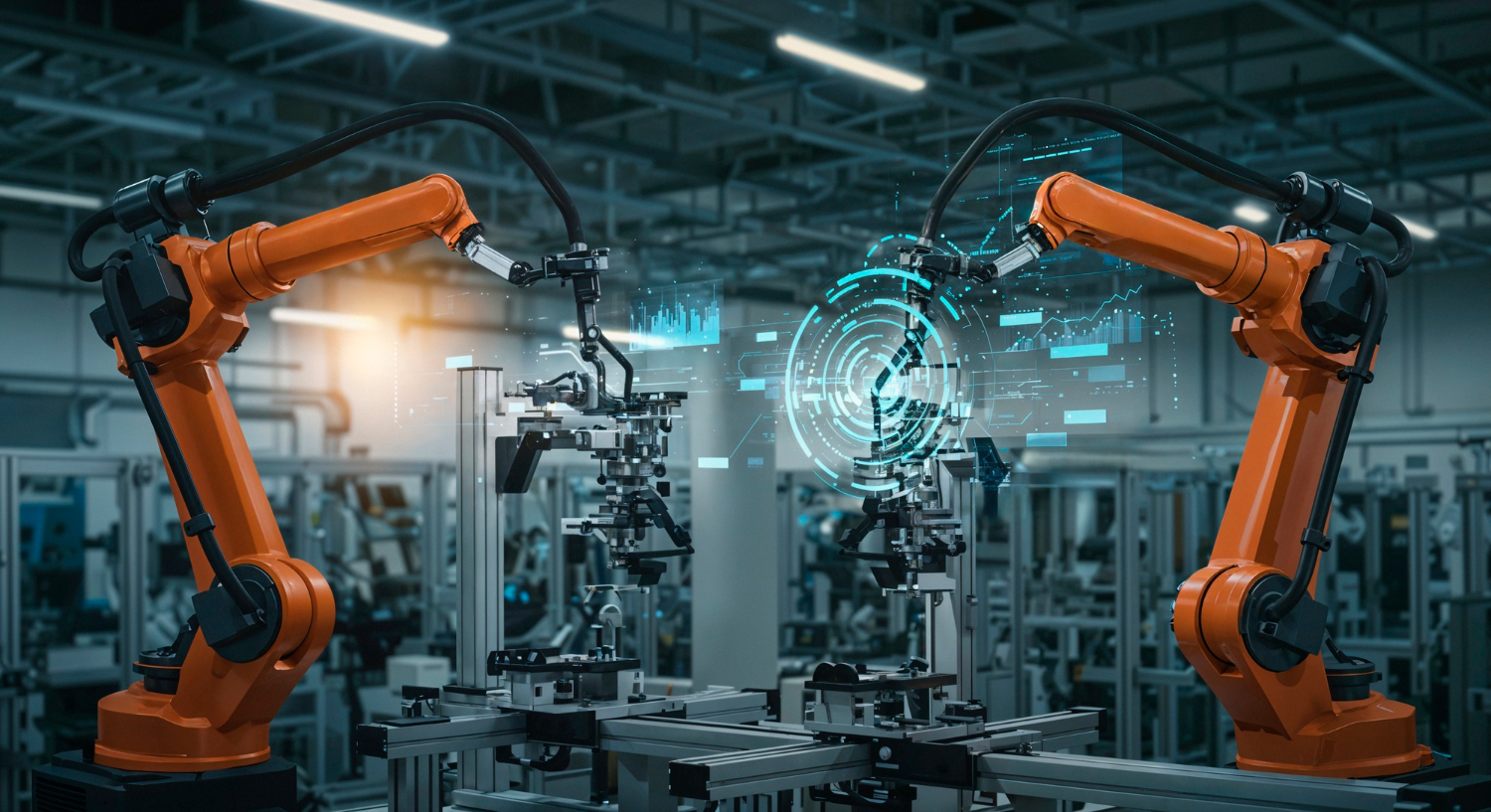
The UAE is moving rapidly toward smarter, more connected, and technology-driven operations. Automation is no longer limited to large manufacturing plants. Today, businesses across industrial, commercial, energy, logistics, and building sectors are using connected control systems to improve productivity, monitor equipment, reduce operational waste, and make faster decisions.
This growing transformation is creating strong demand for an Automation Solution in UAE that combines proven control technologies with modern capabilities such as IoT, artificial intelligence, real-time analytics, and predictive maintenance.
The UAE’s Ministry of Industry and Advanced Technology has made Industry 4.0 a key part of its industrial transformation agenda, with a focus on productivity, digital maturity, sustainability, and advanced technology adoption.
What Is an Automation Solution?
An automation solution is a combination of hardware, software, communication systems, and control technologies designed to operate or monitor processes with less manual intervention.
Depending on the application, an automation system can include:
- Programmable Logic Controllers (PLCs)
- Human-Machine Interfaces (HMIs)
- Variable Frequency Drives (VFDs)
- Industrial sensors
- SCADA systems
- Control panels
- Industrial robots
- Industrial IoT devices
- Energy monitoring systems
- Building automation controls
Rather than simply replacing manual tasks, modern automation connects different parts of an operation so that businesses can monitor performance and respond to changing conditions more effectively.
Why Automation Is Becoming Important in the UAE
The UAE is actively encouraging industrial digitalization and advanced technology adoption. Its Industry 4.0 programme focuses on automating processes, integrating value chains, improving productivity, reducing waste, saving energy, and supporting sustainable industrialization.
In May 2026, the Ministry of Industry and Advanced Technology also announced a partnership aimed at accelerating the use of AI, robotics, and Industry 4.0 technologies across UAE manufacturing. The initiative includes practical technology roadmaps and implementation for manufacturers.
This direction shows why businesses are looking beyond basic automation toward connected and data-driven systems.
Key Benefits of Automation Solutions
1. Improve Operational Efficiency
Automation can perform repetitive processes consistently while allowing employees to focus on supervision, analysis, and higher-value activities.
For manufacturing facilities, automated controls can coordinate machines, production sequences, sensors, and drives to improve process consistency.
2. Reduce Unnecessary Energy Consumption
Automation can monitor how equipment uses energy and adjust operation according to actual demand.
For example, automated HVAC controls, motor speed regulation, lighting controls, and energy monitoring can help facilities identify and reduce unnecessary consumption.
3. Minimize Equipment Downtime
Unexpected equipment failure can affect production schedules and operating costs. Sensors and monitoring systems can identify unusual temperature, vibration, current, pressure, or performance patterns.
This creates an opportunity for businesses to move from purely reactive maintenance toward more proactive maintenance planning.
4. Improve Accuracy and Consistency
Automated systems can follow predefined operating parameters consistently. This is particularly valuable in applications where variations in timing, temperature, pressure, speed, or production sequences can affect product quality.
5. Enable Real-Time Monitoring
Modern automation gives operators visibility into equipment and processes through dashboards, HMIs, SCADA platforms, and connected devices.
Instead of waiting for a problem to become visible, facility teams can monitor important operating parameters continuously.
Where Can Automation Be Used?
An Automation Solution in UAE can be designed for a wide range of applications.
Manufacturing
Factories can automate production lines, machine controls, material handling, quality monitoring, and production data collection.
Building Automation
Commercial buildings can integrate HVAC, lighting, energy monitoring, access control, and other systems through centralized building automation platforms.
Energy Management
Businesses can use automated meters and sensors to understand consumption patterns and identify opportunities for energy optimization.
Water and Utilities
Automation can monitor pumps, flow, pressure, tank levels, and other utility processes while reducing unnecessary manual intervention.
Warehousing and Logistics
Robotics, automated material handling, sensors, and software can work together to improve inventory movement and warehouse efficiency.
AI and IoT Are Changing Automation
The latest generation of automation is moving beyond fixed programming.
Industrial IoT (IIoT) allows machines, sensors, controllers, and software platforms to exchange data. AI and machine learning can then be used to identify patterns, detect anomalies, and support operational decisions.
The UAE’s Industry 4.0 initiatives specifically highlight technologies such as AI, IoT, machine learning, and predictive maintenance as part of the digital transformation of manufacturing.
This does not mean every business needs a complex AI system. The right technology depends on the actual operational problem. A well-designed automation project should begin with business requirements and then select the technology that delivers measurable value.
How to Choose an Automation Partner in the UAE
Before investing in an Automation Solution in UAE, businesses should evaluate several factors:
- Existing machines and control systems
- Required level of automation
- Electrical and communication infrastructure
- Production requirements
- Energy consumption
- Safety considerations
- Scalability
- Integration with existing systems
- Maintenance and technical support
A professional automation assessment can help identify where automation will provide the greatest operational value.
The Future of Automation in UAE
Automation in the UAE is moving toward connected factories, intelligent buildings, predictive maintenance, robotics, digital twins, and real-time analytics.
Recent UAE initiatives have also highlighted autonomous warehouse operations and digital-twin environments as examples of how robotics, software, and real-time decision-making can work together.
The direction is clear: automation is becoming less about individual machines and more about creating connected ecosystems where equipment, software, data, and people work together.
An Automation Solution in UAE can help businesses improve productivity, enhance equipment monitoring, control energy consumption, reduce operational interruptions, and build a stronger foundation for digital transformation.
The most effective automation strategy is not about automating everything. It is about identifying the processes that need better control, visibility, efficiency, or reliability and implementing the right technology around those requirements.
With the UAE continuing to support Industry 4.0, AI, robotics, IoT, and advanced manufacturing, businesses that develop a practical automation roadmap can prepare their operations for a more connected and data-driven future.
Heat Pump System in Dubai: A Smart Solution for Energy-Efficient Heating and Cooling

Dubai’s climate creates a unique challenge for buildings that need reliable temperature control throughout the year. Air conditioning is essential, while hot water production can also account for a significant share of energy consumption. As businesses and property owners look for more efficient HVAC technologies, the
Heat Pump System in Dubai is becoming an increasingly attractive solution.
Heat pump technology can transfer heat rather than generate it directly, allowing the same basic principle to be used for heating, cooling, and hot water applications. With the right system design, heat pumps can help improve energy efficiency while providing dependable temperature control.
What Is a Heat Pump System?
A heat pump is an HVAC system that transfers thermal energy from one location to another. Instead of creating heat through direct combustion or electrical resistance, it uses a refrigeration cycle to move heat.
Depending on the system configuration, a heat pump can provide:
- Space cooling
- Space heating
- Domestic hot water
- Pool heating
- Commercial hot water
- Temperature control for selected industrial applications
This versatility makes heat pumps useful for residential, commercial, hospitality, healthcare, and other facilities.
Why Are Heat Pump Systems Relevant in Dubai?
Dubai has a hot climate and high cooling demand for much of the year. At the same time, many properties require hot water for bathrooms, kitchens, hotels, restaurants, healthcare facilities, and other applications.
A properly selected
Heat Pump System in Dubai can use energy more efficiently by transferring available heat instead of relying entirely on conventional electric heating.
For facilities with continuous hot-water requirements, this can be particularly valuable.
How Does a Heat Pump Work?
A heat pump uses a refrigeration cycle involving components such as:
- Evaporator
- Compressor
- Condenser
- Expansion valve
- Refrigerant
During operation, the system absorbs heat from a source and transfers it to another location.
For cooling, heat is removed from the indoor or process environment and rejected outside. For heating or hot-water production, the system operates to transfer heat into the required space or water system.
The ability to move heat in this way is what makes heat pump technology different from conventional electric heating systems.
Types of Heat Pump Systems
Different properties require different heat pump configurations. Common types include:
Air Source Heat Pumps
Air source heat pumps extract or reject heat through outdoor air. They are widely used for building HVAC and hot-water applications.
Air-to-Water Heat Pumps
These systems transfer heat between outdoor air and a water-based heating or hot-water circuit. They can be suitable for domestic hot water and selected commercial applications.
Water Source Heat Pumps
Water source systems use a water loop or suitable water source as the thermal exchange medium. They can be considered where site conditions support their installation.
Heat Pump Water Heaters
These systems are designed primarily for hot-water production. They can be useful in hotels, residential developments, restaurants, staff accommodation, and commercial properties with significant hot-water demand.
Benefits of a Heat Pump System in Dubai
Improved Energy Efficiency
Heat pumps transfer heat rather than producing it directly. This can result in lower energy consumption compared with some conventional heating technologies, depending on operating conditions and system design.
Heating and Cooling Capability
Certain heat pump systems can provide both heating and cooling, offering greater flexibility from a single technology platform.
Efficient Hot-Water Production
Heat pump water heaters can be an efficient option for properties that require substantial amounts of hot water throughout the day.
Lower Operating Costs
Energy savings can translate into reduced operating costs over the system’s useful life. Actual savings depend on the system efficiency, operating conditions, electricity tariffs, maintenance, and usage patterns.
Reduced Environmental Impact
Lower energy consumption can also help reduce the carbon footprint associated with building operations, particularly when electricity is generated from lower-carbon sources.
Where Can Heat Pumps Be Used in Dubai?
Heat pump technology can be considered for a wide range of applications, including:
- Villas and residential buildings
- Hotels and resorts
- Restaurants
- Hospitals and healthcare facilities
- Schools and educational buildings
- Offices
- Commercial buildings
- Swimming pools
- Staff accommodation
- Sports and fitness facilities
- Industrial facilities
The appropriate heat pump type and capacity depend on the property’s specific heating, cooling, and hot-water requirements.
Heat Pump Systems for Hotels and Hospitality
Hotels have significant hot-water requirements for guest rooms, kitchens, laundry, spas, and other facilities.
A well-designed heat pump solution can support hot-water production while helping manage energy consumption. Systems can also be integrated with storage tanks and existing hot-water infrastructure.
For large hospitality projects, engineers should evaluate the daily hot-water demand, peak loads, water temperatures, available plant-room space, and system redundancy requirements before selecting equipment.
Heat Pump Water Heating for Commercial Buildings
Commercial buildings can have consistent hot-water requirements depending on their occupancy and operations.
A heat pump water heating system can be designed around the building’s hot-water demand and integrated with storage systems. This approach may be particularly useful where hot-water consumption is high and continuous.
What Should You Consider Before Installing a Heat Pump?
Selecting a heat pump should involve more than simply choosing equipment based on capacity.
Important factors include:
1. Heat Load
The required heating or hot-water capacity should be calculated based on actual building requirements.
2. Ambient Conditions
Outdoor temperatures can affect heat pump performance. Equipment should be selected according to the expected operating conditions in Dubai.
3. Water Temperature Requirements
Hot-water applications may require different temperature levels. The selected heat pump must be capable of meeting the required conditions.
4. System Location
Outdoor units require suitable ventilation and adequate installation clearance.
5. Existing HVAC Infrastructure
Heat pumps may be integrated with existing HVAC, hot-water storage, pumps, controls, and distribution systems depending on the project.
6. Controls and Monitoring
Modern systems can incorporate smart controls and monitoring to help optimise performance and identify operating issues.
Heat Pump Installation in Dubai
Professional installation is important for achieving reliable performance.
A typical installation process may include:
- Site assessment
- Load calculation
- Equipment selection
- System design
- Hydraulic and electrical planning
- Equipment installation
- Pipework and insulation
- Control integration
- Testing and commissioning
- Performance verification
The installation should comply with applicable local requirements and the manufacturer’s technical specifications.
Heat Pump Maintenance
Regular maintenance helps maintain efficiency and reliability.
Depending on the system, maintenance can include:
- Checking refrigerant-related components
- Cleaning heat exchangers
- Inspecting filters
- Checking pumps and valves
- Inspecting electrical connections
- Testing control systems
- Checking water circulation
- Inspecting insulation
- Monitoring operating temperatures
- Checking for abnormal noise or vibration
Preventive maintenance can also help identify developing problems before they result in unexpected downtime.
Heat Pumps vs Conventional Heating
Traditional electric heating systems convert electrical energy directly into heat. A heat pump instead transfers heat using a refrigeration cycle.
This difference can make heat pumps more energy-efficient in suitable applications. However, actual performance depends on factors such as ambient conditions, required output temperature, equipment efficiency, system design, and operating profile.
Therefore, a proper technical assessment should be completed before making an investment decision.
Is a Heat Pump Suitable for Every Property?
Not necessarily.
A heat pump should be selected according to the property’s specific requirements. Factors such as available space, required temperature, peak demand, existing infrastructure, outdoor conditions, water storage capacity, and operating schedule can influence the final design.
For some applications, a hybrid or integrated solution may provide better overall performance than using a heat pump alone.
Why Professional Heat Pump Services Matter
Correct system sizing and installation are essential for long-term performance. An oversized or incorrectly configured system may operate inefficiently, while an undersized system may struggle to meet peak demand.
Professional heat pump services can include:
- Heat pump consultation
- Load assessment
- System design
- Equipment supply
- Heat pump installation
- Hot-water system integration
- Control integration
- Testing and commissioning
- Preventive maintenance
- Troubleshooting and repair
Choose an Energy-Efficient Heat Pump System in Dubai
As Dubai’s buildings continue to focus on energy efficiency and smarter HVAC technologies, heat pumps offer an efficient approach to heating, cooling, and hot-water requirements.
A properly designed
Heat Pump System in Dubai can provide reliable performance while supporting energy-efficient building operation. Whether the requirement is for a villa, hotel, commercial building, healthcare facility, swimming pool, or industrial application, the system should be selected based on actual load requirements and site conditions.
Before installation, work with qualified HVAC professionals to evaluate the application, calculate the required capacity, and determine the most suitable heat pump configuration for long-term performance.
Uninterrupted Power Supply in UAE: A Smarter Approach to Reliable Power Protection
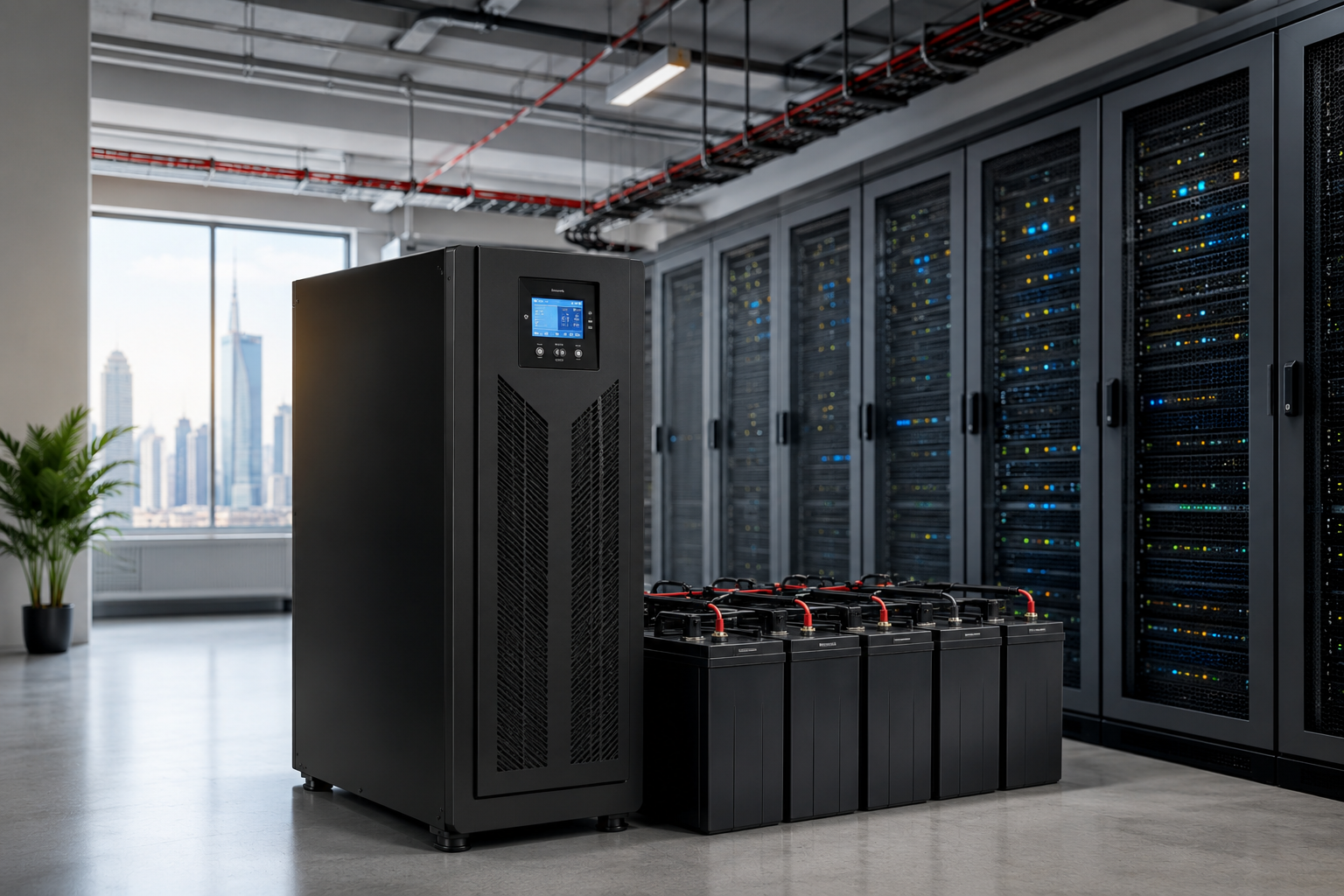
Reliable electricity is essential for modern businesses. In the UAE, offices, hospitals, data centers, hotels, retail facilities, factories, and commercial buildings depend on electrical equipment throughout the day. Even a short power interruption can affect operations, damage sensitive equipment, or cause data loss.
This is why an Uninterrupted Power Supply in UAE is an important part of modern power protection. A UPS provides backup power immediately when the main supply fails while also helping protect connected equipment from certain electrical disturbances.
What Is an Uninterrupted Power Supply?
An Uninterruptible Power Supply, commonly called a UPS, is a backup power system that provides temporary electricity to connected equipment when the primary power source becomes unavailable or unstable.
Unlike a conventional generator, a UPS can respond almost instantly to a power interruption. Depending on the system design and battery capacity, it can keep essential equipment operating until the main supply returns or another backup source takes over.
Modern UPS systems can also provide functions such as voltage regulation, power conditioning, monitoring, and controlled shutdown.
Why Businesses in the UAE Need UPS Protection
The UAE has a highly developed power infrastructure. However, businesses still need protection against unexpected interruptions, voltage fluctuations, electrical disturbances, and equipment failures.
For a company operating critical digital or industrial systems, downtime can be expensive.
An Uninterrupted Power Supply in UAE can help businesses maintain continuity for important equipment such as:
- Servers and networking equipment
- Data centre infrastructure
- Medical equipment
- Security systems
- Industrial automation systems
- Communication equipment
- POS and retail systems
- Building management systems
- Control panels and monitoring equipment
The right UPS solution provides an additional layer of protection between the electrical supply and critical loads.
Key Benefits of a UPS System
1. Continuous Backup Power
The primary purpose of a UPS is to provide immediate backup power when the main supply is interrupted. This helps prevent sudden shutdowns of essential equipment.
2. Protection for Sensitive Equipment
Modern electronic equipment can be affected by voltage fluctuations, surges, and other power-quality problems. A suitable UPS can help deliver cleaner and more stable power to connected loads.
3. Reduced Downtime
Unexpected downtime can interrupt production, communication, transactions, and business services. UPS backup gives organizations valuable time to maintain operations or safely switch to another power source.
4. Data Protection
Servers and computer systems can lose unsaved information or become vulnerable to data corruption following an unexpected shutdown. UPS systems help provide the time needed for systems to remain operational or shut down properly.
5. Better Business Continuity
For organizations where electricity is critical to daily operations, UPS technology supports a wider business-continuity strategy. It can work alongside generators and other backup systems to provide layered power protection.
Choosing the Right UPS for Your Facility
There is no single UPS system suitable for every business. The right solution depends on the electrical load, equipment sensitivity, required backup time, available space, and future expansion plans.
Common UPS configurations include:
Standby UPS: Generally suitable for basic applications where simple backup protection is required.
Line-interactive UPS: Provides additional voltage regulation and is suitable for many small and medium-sized applications.
Online UPS: Continuously conditions the power supplied to connected equipment and is commonly selected for critical applications that require a high level of power protection.
A professional assessment can determine the appropriate capacity and configuration for your facility.
UPS Applications Across the UAE
An Uninterrupted Power Supply in UAE can support a wide range of sectors.
Data centres require continuous power to protect servers, networking infrastructure, and stored information.
Healthcare facilities depend on reliable electricity for critical medical and monitoring equipment.
Manufacturing plants can use UPS systems to protect automation controls, PLCs, instrumentation, and other sensitive systems.
Commercial buildings use UPS solutions for security, communication, IT, access control, and building automation equipment.
Hotels and retail businesses can protect payment systems, servers, communication systems, and other essential equipment from unexpected interruptions.
Why UPS Maintenance Matters
Installing a UPS is only the beginning. Batteries and other components require regular inspection and maintenance to ensure the system performs when it is needed.
Professional UPS maintenance may include battery condition checks, electrical inspections, system testing, alarm verification, load assessment, and performance monitoring.
Battery condition is particularly important because batteries naturally lose capacity over time. Identifying deterioration early can help prevent unexpected backup failures.
The Future of UPS Technology
UPS technology is becoming increasingly intelligent. Modern systems can connect to monitoring platforms and provide information about battery health, load levels, temperature, system status, and potential faults.
Advanced monitoring can also support predictive maintenance, helping facility teams identify problems before they become major failures.
Energy efficiency is another important consideration. Modern UPS systems are designed to operate efficiently under different load conditions, helping organizations balance reliability with responsible energy management.
An Uninterrupted Power Supply in UAE is more than a backup battery system. It is an important component of a reliable electrical infrastructure, protecting critical equipment and helping businesses maintain continuity when unexpected power problems occur.
From offices and data centers to hospitals and industrial facilities, choosing the right UPS system can reduce downtime, protect valuable equipment, and improve overall power resilience. With professional design, installation, monitoring, and maintenance, businesses can build a dependable power-protection strategy that is ready for both today’s requirements and future growth.
Air Purification System in Dubai: A Smarter Approach to Healthier Indoor Air
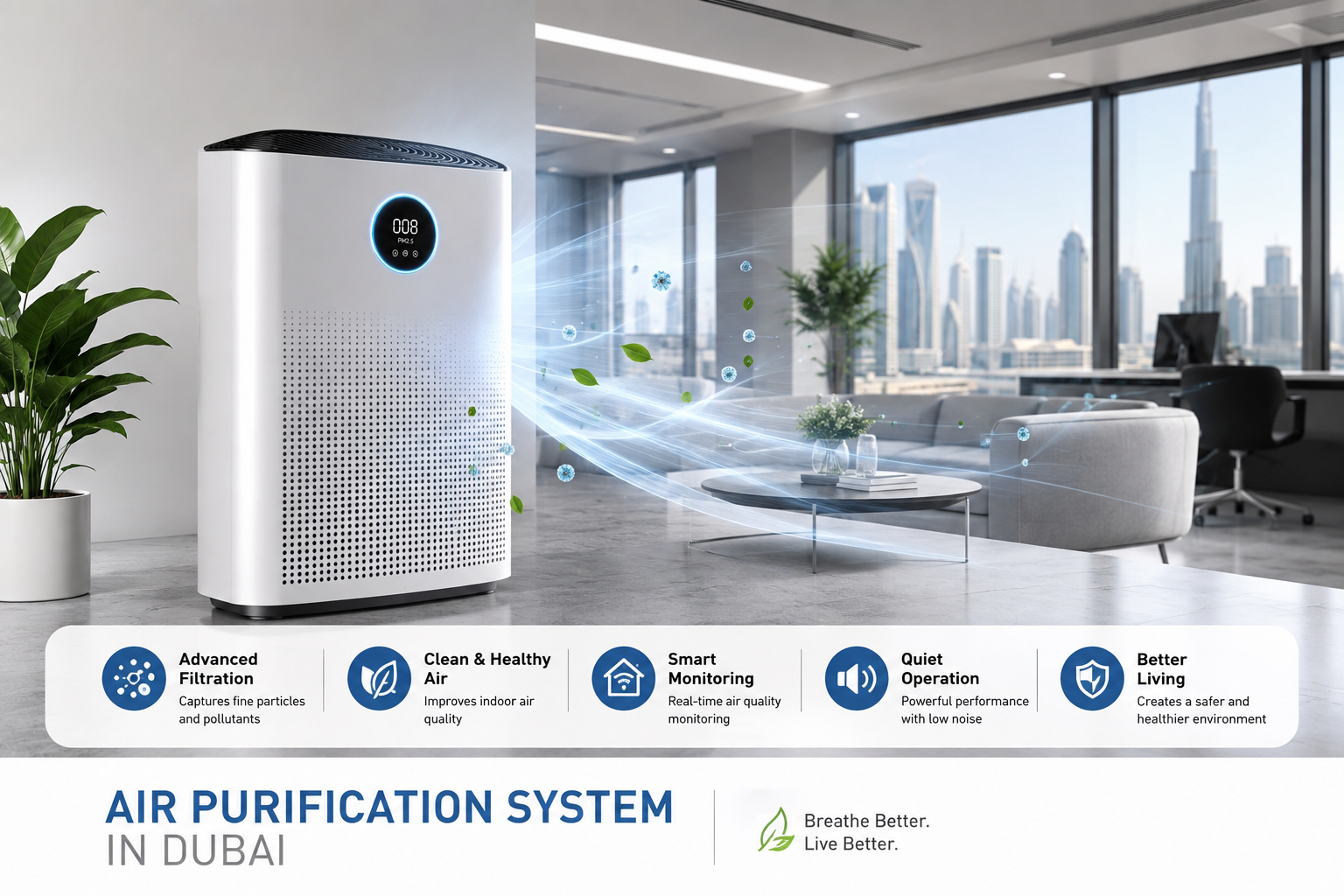
Dubai is known for its modern buildings, busy commercial spaces, and advanced infrastructure. People spend a significant part of their day indoors, whether at home, in offices, hotels, schools, healthcare facilities, or shopping centres. This makes indoor air quality an important part of creating comfortable and productive spaces.
A professionally designed Air Purification System in Dubai can help buildings manage airborne particles and improve indoor air quality when integrated properly with ventilation and filtration systems. With Dubai increasingly adopting smart building technologies, air purification is also becoming more data-driven, efficient, and responsive.
Why Indoor Air Quality Matters in Dubai
Dubai’s climate creates particular challenges for building operators. Dust and fine particulate matter can enter buildings, while air-conditioned spaces continuously circulate indoor air. Indoor pollutants can also come from cleaning products, furnishings, construction materials, cooking activities, and everyday occupancy.
Dubai’s green-building requirements place importance on adequate ventilation and indoor air quality. The guidelines address ventilation, outdoor-air intake locations, filtration during construction, and indoor air-quality testing.
This makes air-quality management more than simply installing a purifier. The complete building environment needs to be considered.
What Is an Air Purification System?
An air purification system is designed to reduce unwanted airborne contaminants from indoor environments. Depending on the building and application, a system may combine different technologies, such as:
- High-efficiency particulate filtration
- Activated carbon filtration
- UV-based air treatment
- Air-quality sensors
- HEPA filtration where appropriate
- Mechanical ventilation
- Smart monitoring and control systems
The right combination depends on factors such as building size, occupancy, existing HVAC equipment, pollutant sources, and required air-quality performance.
Benefits of an Air Purification System in Dubai
1. Better Indoor Air Quality
A properly selected Air Purification System in Dubai can help reduce airborne particles and other contaminants, supporting a cleaner indoor environment.
2. Improved Occupant Comfort
Poor indoor air can contribute to unpleasant odours, dust accumulation, and an uncomfortable environment. Effective filtration and ventilation can help create fresher indoor spaces.
3. Support for HVAC Performance
Air purification should work alongside the building’s HVAC system rather than being treated as a standalone solution. Proper filtration can help control airborne particles circulating through the system, although filters must be selected carefully to avoid unnecessarily increasing pressure drop and energy consumption.
4. Smart Air-Quality Monitoring
Modern systems can incorporate sensors that monitor parameters such as particulate matter, carbon dioxide, temperature, and humidity. Data can then be used to adjust ventilation or alert facility teams when maintenance is required.
This approach fits the UAE’s wider move toward technology-enabled air-quality management. The UAE’s National Air Quality Platform uses AI-based analysis and real-time information to monitor outdoor air quality and particulate pollution.
Where Are Air Purification Systems Used?
An Air Purification System in Dubai can be considered for a wide range of properties, including:
- Offices and corporate buildings
- Hotels and hospitality facilities
- Schools and educational institutions
- Hospitals and healthcare facilities
- Shopping malls
- Restaurants
- Residential buildings
- Fitness centres
- Warehouses and industrial facilities
Each application requires a different approach. A hospital, for example, has very different air-quality requirements from a retail shop or office.
Air Purification and Smart Buildings
The next generation of air-quality management is moving beyond standalone equipment. Sensors, Building Management Systems (BMS), HVAC controls, and analytics can work together to provide a more intelligent solution.
A good example of this direction is DEWA’s Al Shera’a headquarters, which uses more than 110,000 smart sensors and AI and IoT technologies to monitor building operations in real time. Its integrated systems include indoor air-quality monitoring alongside HVAC, lighting, and other building functions.
This demonstrates how indoor environmental quality can become part of a broader smart-building strategy.
Choosing the Right System
There is no universal air purifier that works perfectly for every Dubai property. Before selecting equipment, building owners and facility managers should consider:
Building assessment: Understand the existing HVAC and ventilation arrangement.
Pollutant assessment: Identify whether the main concern is dust, particulate matter, odours, VOCs, or another contaminant.
Airflow requirements: Select equipment that matches the building’s air volume and operating conditions.
Filter selection: Choose filtration according to the required air-quality performance and HVAC capabilities.
Monitoring: Consider sensors and automated controls for continuous performance tracking.
Maintenance: Filters, sensors, and other components require regular inspection and replacement according to manufacturer recommendations and system requirements.
A More Sustainable Approach to Indoor Air
Air purification should not be viewed as a replacement for proper ventilation. Dubai’s building guidance emphasizes appropriate ventilation and indoor-air-quality management, including suitable outdoor-air intake and exhaust arrangements.
The most effective approach is therefore to combine ventilation, filtration, source control, monitoring, and regular maintenance.
This can improve indoor environmental quality while helping building operators avoid unnecessary energy consumption.
Investing in an Air Purification System in Dubai can be an important step toward creating cleaner, healthier, and more comfortable indoor environments. However, the best results come from designing purification as part of the building’s overall HVAC and indoor-air-quality strategy.
As Dubai continues to embrace smart buildings, AI, IoT, and sustainable infrastructure, air-quality systems are becoming increasingly intelligent. For property owners and facility managers, the focus should not simply be on buying an air purifier—it should be on creating a measurable, efficient, and properly maintained indoor air-quality solution that works for the building and its occupants.
Air Purification, Uninterrupted Power Supply & Building Automation in the UAE: A Complete Guide to Smarter Facilities

The UAE’s commercial and industrial buildings are under growing pressure to do more than cut energy bills. Hospitals, hotels, data centers, and factories now need cleaner air, an uninterrupted power supply, and building systems that respond intelligently to real-time conditions. Facility managers across Dubai, Abu Dhabi, and Sharjah are asking the same practical question: how do air purification, UPS, building management systems (BMS), and automation actually work together?
This guide breaks down each system, explains why it matters in the UAE’s climate and grid conditions, and shows how integrating them creates measurably safer, more reliable, and more energy-efficient facilities.
What Do Air Purification, UPS, BMS and Automation Mean for a UAE Facility?
In simple terms:
- Air purification systems remove airborne contaminants — dust, VOCs, smoke, and pathogens — from a building’s air supply, usually integrated into the HVAC system.
- An uninterrupted power supply (UPS) protects critical equipment from outages, voltage sags, and harmonic disturbances.
- A building management system (BMS) centrally monitors and controls HVAC, lighting, power, and access systems from a single dashboard.
- Automation ties these systems together using sensors and open protocols like SCADA and Modbus, so the building responds to real-time data instead of manual intervention.
Together, these four layers form the operational backbone of a modern, energy-efficient facility.
Why Indoor Air Quality Matters in the UAE Climate
Common Air Quality Challenges in Dubai Buildings
The UAE’s climate creates specific indoor air quality pressures that many other regions don’t face. Fine desert dust infiltrates ventilation systems, buildings run air conditioning almost year-round in sealed environments, and high ambient humidity encourages mold growth inside ducts and cooling coils. Elevated CO2 levels in densely occupied commercial spaces are also common where ventilation rates haven’t kept pace with occupancy.
How Air Purification Systems Improve Health & Compliance
Modern air purification systems — including HEPA filtration, electrostatic precipitators, and smoke filters integrated directly into HVAC air handling units — remove particulates and pathogens before they reach occupied space. For hospitals and hospitality venues, this isn’t optional: it directly supports occupant wellbeing, reduces sick-building complaints, and helps facilities align with green building frameworks such as Dubai Municipality’s Green Building Regulations and Abu Dhabi’s Estidama program. Cleaner air also reduces strain on HVAC coils and filters, extending equipment life.
Uninterrupted Power Supply: The Backbone of Business Continuity
Why UAE Businesses Need Reliable UPS Systems
While the UAE’s grid infrastructure is generally strong, voltage sags, brief interruptions, and load-related disturbances still occur — and for data centers, hospitals, and production lines, even a few seconds of downtime can be costly. A properly sized UPS bridges that gap, protecting servers, medical equipment, and automated production systems until backup generation or grid stability is restored.
UPS Alongside Power Quality — AHF, SVG & Voltage Optimization
A UPS works best as part of a broader power quality strategy, not in isolation. Active Harmonic Filters (AHF) correct the harmonic distortion generated by variable frequency drives and other non-linear loads. Static Var Generators (SVG) correct power factor issues that increase utility costs. Voltage optimization stabilizes incoming supply before it ever reaches sensitive equipment. Combined with a UPS, these tools create end-to-end continuity rather than a single point of protection.
Building Management Systems: The Brain of a Smart Facility
What a BMS Controls
A
building management system typically centralizes control of HVAC, lighting, access control, and energy metering into one dashboard, giving facility teams visibility they can’t get from managing each system separately. This is especially valuable in large commercial facilities, cooling plants, and mixed-use developments where dozens of subsystems would otherwise operate independently.
SCADA, Modbus & Open Integration
The most future-proof BMS deployments use open-protocol SCADA networks built on standards like Modbus, rather than locking a facility into a single proprietary vendor. This allows third-party chillers, meters, and sensors to be integrated as a facility grows. Platforms such as Siemens WinCC are commonly used across UAE industrial automation projects for exactly this reason — they support flexible, scalable integration rather than a closed ecosystem.
Automation Solutions: Connecting Air, Power & Building Systems
Smart Meters & Sensors
Smart meters and environmental sensors are what make automation possible in the first place. They continuously feed real-time energy consumption, power quality, and air quality data into the BMS, replacing manual readings and periodic audits with continuous visibility.
Real-Time Monitoring & Predictive Maintenance
With that data flowing continuously, automation systems can flag anomalies — a harmonic spike, a clogging air filter, a dropping power factor — before they cause equipment failure or unplanned downtime. This shifts facility management from reactive repairs to predictive maintenance, which is consistently the largest driver of long-term cost savings in energy efficiency projects.
Key Benefits of Integrating These Systems
- Lower operating and utility costs through corrected power factor and reduced energy waste
- Extended equipment lifespan across HVAC, UPS, and electrical distribution assets
- Healthier indoor environments and stronger compliance with green building standards
- Single-dashboard visibility across power, air, and building systems
- Reduced downtime risk for data centers, hospitals, and production facilities
- Measurable progress toward sustainability and carbon reduction targets
Choosing the Right Partner in the UAE
Energy Savers Technical Services LLC, based in Business Bay, Dubai, has delivered more than 150 installations across power quality, HVAC, and automation since establishing operations in the UAE in 2013. The company works across hospitality, industrial plants, data centers and telecom, commercial facilities, and cooling plants — sectors where power reliability, air quality, and automated monitoring aren’t separate concerns but interconnected parts of the same efficiency strategy.
Choosing a partner with experience across all four layers — air purification, power quality, BMS, and automation — means a facility gets one coherent system rather than four disconnected vendors.
FAQ
1. What is the difference between a UPS and voltage optimization?
A UPS provides emergency backup power during an outage, typically from a battery, so equipment keeps running. Voltage optimization instead stabilizes and corrects the incoming supply during normal operation, preventing damage from voltage fluctuations before an outage ever occurs. Most facilities benefit from both working together.
2. Do air purification systems work with existing HVAC systems in Dubai buildings?
Yes. Most air purification solutions, including HEPA and electrostatic filtration units, are designed to integrate into existing HVAC air handling units rather than requiring a full system replacement, making them a practical retrofit for buildings already dealing with UAE dust and humidity conditions.
3. How does a Building Management System (BMS) improve energy efficiency?
A BMS centralizes control of HVAC, lighting, and power systems, allowing facility teams to identify waste, automate schedules, and respond to real-time consumption data. This visibility typically uncovers savings that manual, siloed system management would miss entirely.
4. Why do industrial facilities in the UAE need harmonic filters alongside a UPS?
A UPS protects against outages, but it doesn’t correct harmonic distortion from variable frequency drives and other non-linear loads. Active Harmonic Filters address that distortion directly, protecting equipment and improving power quality upstream of the UPS itself.
5. Can UAE automation systems integrate with third-party equipment?
Yes, when built on open protocols like Modbus and SCADA platforms such as Siemens WinCC. Open-protocol automation avoids vendor lock-in, letting facilities add third-party chillers, meters, and sensors as the building’s needs grow.
6. How much energy can a UAE business save with an integrated BMS and power quality solution?
Savings vary by facility size and existing inefficiencies, but combining power factor correction, harmonic mitigation, and BMS-driven HVAC scheduling commonly reduces energy waste and utility costs meaningfully within the first year of operation.
7. What sectors benefit most from combined air quality, UPS, and automation systems?
Hospitals, hotels, data centers and telecom facilities, industrial plants, and cooling plants see the largest impact, since each sector depends on both continuous power and controlled indoor environments to meet safety, comfort, or uptime requirements.
Demand Control Kitchen Ventilation System in UAE: The Smart Solution for Energy-Efficient Commercial Kitchens
Commercial kitchens are among the most energy-intensive spaces in any building. Restaurants, hotels, hospitals, and catering facilities rely on powerful ventilation systems to maintain air quality, remove heat, and ensure a safe working environment. However, traditional kitchen ventilation systems often operate at full speed throughout the day, consuming large amounts of energy even when cooking activity is low.
This is where a Demand Control Kitchen Ventilation System in UAE makes a significant difference. By automatically adjusting ventilation based on real-time cooking demand, these intelligent systems improve energy efficiency, reduce operating costs, and create a more comfortable kitchen environment.
What Is a Demand Control Kitchen Ventilation System?
A Demand Control Kitchen Ventilation System in UAE is an advanced ventilation solution that uses smart sensors to monitor cooking activity, temperature, smoke, and heat. Instead of running exhaust and supply fans at maximum speed continuously, the system adjusts airflow according to the actual cooking load.
For example, during busy meal preparation periods, the system increases ventilation to remove excess heat and smoke. During quieter hours, it reduces fan speed, saving energy while maintaining proper air quality.
This intelligent approach helps businesses achieve better operational efficiency without compromising kitchen safety.
Why Businesses in UAE Need Smart Kitchen Ventilation
The UAE’s hospitality industry continues to expand with new restaurants, hotels, cloud kitchens, and food service facilities opening every year. At the same time, businesses are looking for ways to reduce energy consumption and operating expenses.
A Demand Control Kitchen Ventilation System in UAE offers an effective solution by optimizing ventilation performance while supporting sustainability goals.
Some key reasons businesses are adopting these systems include:
- Rising electricity costs
- Sustainability initiatives across the UAE
- Improved indoor air quality requirements
- Enhanced employee comfort
- Better equipment performance
Key Benefits of a Demand Control Kitchen Ventilation System
Significant Energy Savings
Kitchen exhaust fans consume substantial amounts of electricity. A Demand Control Kitchen Ventilation System in UAE reduces unnecessary fan operation by adjusting airflow based on actual demand, leading to considerable energy savings.
Lower Operating Costs
Reduced energy consumption means lower electricity bills. Businesses also save on maintenance because fans and motors operate fewer hours, extending their lifespan.
Improved Kitchen Comfort
Commercial kitchens generate excessive heat during cooking. Smart ventilation removes heat efficiently when required while preventing over-ventilation during slower periods, creating a more comfortable workspace for kitchen staff.
Better Indoor Air Quality
The system continuously monitors cooking conditions and maintains proper ventilation levels. This ensures effective removal of smoke, grease particles, odors, and airborne contaminants.
Reduced Carbon Footprint
Energy-efficient ventilation contributes to lower carbon emissions, helping organizations meet sustainability objectives and environmental regulations within the UAE.
Applications Across Different Industries
A Demand Control Kitchen Ventilation System in UAE is suitable for various commercial food service facilities, including:
- Hotels
- Restaurants
- Cafés
- Food courts
- Hospitals
- Educational institutions
- Industrial cafeterias
- Catering kitchens
- Cloud kitchens
Whether operating a single restaurant or managing multiple hospitality locations, intelligent kitchen ventilation improves efficiency and reduces operating costs.
How the System Works
Modern demand-controlled ventilation systems use advanced sensors that detect:
- Temperature changes
- Smoke levels
- Steam production
- Cooking activity
- Heat generated by cooking appliances
Based on this data, the controller automatically adjusts exhaust and supply fan speeds using variable frequency drives (VFDs). This ensures the ventilation system delivers only the airflow required at any given moment.
The result is optimal ventilation with minimal energy consumption.
Why Professional Installation Matters
Every commercial kitchen has unique ventilation requirements. Factors such as kitchen size, cooking equipment, operating hours, and local regulations all influence system design.
Working with experienced professionals ensures your Demand Control Kitchen Ventilation System in UAE is properly designed, installed, commissioned, and maintained for maximum performance and long-term reliability.
Expert installation also helps businesses comply with local safety standards while achieving the highest level of energy efficiency.
The Future of Smart Commercial Kitchens
As the UAE continues investing in smart buildings and sustainable infrastructure, intelligent kitchen technologies are becoming increasingly important. Demand-controlled ventilation systems can integrate with Building Management Systems (BMS), energy monitoring platforms, and IoT-enabled devices, providing real-time performance insights and predictive maintenance capabilities.
These innovations help facility managers optimize energy use while improving operational efficiency.
Installing a Demand Control Kitchen Ventilation System in UAE is a smart investment for any commercial kitchen seeking to reduce energy costs, improve air quality, and support sustainable operations. By automatically matching ventilation to actual cooking demand, businesses can achieve significant savings while creating a safer and more comfortable working environment.
As energy efficiency becomes a priority across the UAE, demand-controlled kitchen ventilation is no longer just an upgrade—it’s an essential component of modern commercial kitchen design.
Capacitor Bank in UAE: Improve Power Factor and Electrical Efficiency
Modern commercial and industrial facilities depend on stable and efficient electrical systems. As electrical loads increase, poor power factor can lead to higher energy losses, reduced system efficiency, and unnecessary demand charges. Installing the right
Capacitor Bank in UAE can help businesses manage reactive power and improve the overall performance of their electrical infrastructure.
Capacitor banks are widely used in factories, commercial buildings, warehouses, hotels, shopping centers, and other facilities where inductive loads such as motors, pumps, compressors, and transformers are common.
What Is a Capacitor Bank?
A capacitor bank is an arrangement of multiple power capacitors connected together to provide reactive power compensation. It works by supplying reactive power close to inductive electrical loads, reducing the amount of reactive power that needs to be drawn from the utility supply.
A properly designed capacitor bank can help improve power factor while supporting more efficient operation of the electrical distribution system.
Depending on the application, capacitor banks can be installed as:
- Automatic capacitor banks
- Fixed capacitor banks
- Detuned capacitor banks
- APFC panels
- Low-voltage capacitor banks
- Medium-voltage capacitor banks
The correct configuration depends on the site’s electrical load profile, voltage level, harmonic conditions, and power factor requirements.
Why Is a Capacitor Bank Important in UAE?
Electrical systems in UAE facilities can operate with a wide range of loads throughout the day. Industrial equipment, HVAC systems, elevators, pumps, compressors, and production machinery can create significant reactive power demand.
Installing a suitable
Capacitor Bank in UAE can provide several advantages.
1. Power Factor Improvement
One of the primary purposes of a capacitor bank is to improve power factor. Better power factor means the electrical system can use supplied power more efficiently.
2. Reduced Electrical Losses
Power factor correction can reduce unnecessary current flow through cables, transformers, and other distribution equipment. This can contribute to lower I²R losses within the electrical system.
3. Better Utilization of Electrical Infrastructure
When reactive power demand is controlled, available capacity in transformers, switchboards, cables, and other electrical equipment can be used more effectively.
4. Improved Voltage Performance
A correctly engineered capacitor bank can support voltage conditions within an electrical distribution system, particularly where inductive loads are significant.
5. Support for Industrial Operations
Factories and industrial facilities often operate motors and other inductive equipment continuously. Power factor correction can therefore play an important role in maintaining efficient electrical operation.
How Does a Capacitor Bank Work?
Inductive loads require both active power and reactive power. While active power performs useful work, reactive power supports the magnetic fields required by equipment such as motors and transformers.
A capacitor produces reactive power that counteracts part of the reactive power demand from inductive equipment.
In an automatic power factor correction system, a controller continuously monitors the electrical system and switches capacitor stages ON or OFF according to the required compensation.
This allows the system to maintain the desired power factor without unnecessarily overcompensating the electrical network.
Automatic Power Factor Correction (APFC) Capacitor Banks
An APFC panel is commonly used where electrical loads change throughout the day.
The system typically includes:
- Capacitor units
- APFC controller
- Contactors or switching devices
- Protection equipment
- Busbars
- Fuses or circuit breakers
- Harmonic protection components where required
- Panel enclosure
- Power factor monitoring
The APFC controller measures the power factor and automatically adds or removes capacitor stages based on the electrical demand.
This makes automatic capacitor banks suitable for facilities with variable loads.
Capacitor Banks and Harmonics
Harmonic distortion is an important consideration when designing power factor correction systems.
Modern facilities may contain nonlinear loads such as variable frequency drives, UPS systems, switching power supplies, data centre equipment, and electronic control systems. These loads can introduce harmonics into the electrical network.
Simply installing standard capacitors without analysing the harmonic environment may create unwanted resonance conditions.
For facilities with significant harmonic distortion, engineers may consider
detuned capacitor banks or other suitable harmonic mitigation solutions.
A proper electrical assessment should therefore be completed before selecting the capacitor bank configuration.
Where Are Capacitor Banks Used?
A
Capacitor Bank in UAE can be suitable for many types of facilities, including:
- Manufacturing plants
- Industrial facilities
- Commercial buildings
- Warehouses
- Hotels
- Shopping centres
- Hospitals
- Data centres
- Water treatment facilities
- HVAC-intensive buildings
- Pumping stations
- Large workshops
The required capacitor capacity should always be selected according to the actual electrical characteristics of the facility.
How to Choose the Right Capacitor Bank
Choosing a capacitor bank is not simply a matter of selecting a particular kVAr rating. Several technical factors should be evaluated.
Electrical Load Profile
The facility’s current and expected electrical demand should be analysed to determine the appropriate compensation requirement.
Existing Power Factor
Measurements of the existing power factor can help engineers calculate how much correction is required.
Harmonic Distortion
A harmonic study may be necessary where the facility contains substantial nonlinear loads.
Voltage Level
Capacitor banks must be correctly matched to the system voltage and electrical distribution architecture.
Switching Requirements
Facilities with rapidly changing loads may require automatic switching rather than fixed compensation.
Future Expansion
The design should consider planned equipment additions and future increases in electrical demand.
Capacitor Bank Installation in UAE
Professional installation is essential for safe and reliable operation. The installation process normally begins with an assessment of the existing electrical system.
Engineers may review:
- Electrical load requirements
- Existing power factor
- Voltage and current measurements
- Harmonic levels
- Transformer capacity
- Distribution panel configuration
- Required kVAr compensation
- Suitable capacitor bank technology
- Protection and switching requirements
After installation, testing and commissioning help verify that the system operates correctly under different load conditions.
Capacitor Bank Maintenance
Regular maintenance can help extend the operating life of capacitor bank equipment and reduce the risk of unexpected failures.
Maintenance may include:
- Checking capacitor condition
- Inspecting electrical connections
- Checking panel ventilation
- Inspecting contactors and switching components
- Monitoring capacitor temperature
- Checking protection devices
- Measuring power factor
- Monitoring harmonic distortion
- Inspecting for abnormal noise or swelling
- Checking controller operation
Facilities with critical electrical systems may benefit from scheduled preventive maintenance and periodic electrical measurements.
Benefits of Professional Capacitor Bank Services
Working with experienced electrical specialists can help ensure that the capacitor bank is correctly sized, installed, protected, and commissioned.
Professional services may include:
- Power factor analysis
- Capacitor bank design
- APFC panel design
- Capacitor bank supply
- Installation and commissioning
- Harmonic assessment
- Detuned capacitor bank solutions
- Testing and troubleshooting
- Preventive maintenance
- Replacement of damaged capacitor components
The objective should not simply be to install capacitors but to create a power factor correction system that works reliably with the facility’s actual electrical loads.
Improve Electrical Efficiency with a Capacitor Bank in UAE
Power factor management is an important part of efficient electrical system design. For facilities operating motors, HVAC equipment, pumps, compressors, transformers, and other inductive loads, a correctly designed
Capacitor Bank in UAE can help improve power factor, reduce electrical losses, and make better use of existing electrical infrastructure.
Before selecting a capacitor bank, businesses should evaluate their load profile, power factor, voltage conditions, and harmonic environment. Professional design, installation, testing, and maintenance can help ensure dependable long-term performance.
If your facility requires power factor correction, an electrical assessment can determine whether a fixed capacitor bank, automatic APFC system, or detuned capacitor bank is the most appropriate solution.
EV Charger in Dubai: Powering the Future of Sustainable Transportation

Electric vehicles (EVs) are becoming increasingly popular across the UAE as individuals and businesses embrace cleaner, smarter, and more sustainable transportation. With government initiatives supporting green mobility and the rapid expansion of charging infrastructure, installing an EV Charger in Dubai has become an important step for homeowners, businesses, and commercial property owners.
Whether you own an electric vehicle or are planning to invest in one, having access to a reliable charging solution offers convenience, efficiency, and long-term cost savings. As Dubai continues to develop as a smart city, EV charging infrastructure is playing a key role in supporting the emirate’s sustainable future.
Why Electric Vehicles Are Growing in Dubai
Dubai has made significant investments in sustainable transportation as part of its clean energy and environmental initiatives. Government incentives, improved charging infrastructure, and increasing public awareness have encouraged more residents to switch to electric vehicles.
Choosing an EV Charger in Dubai allows vehicle owners to enjoy faster, safer, and more reliable charging while supporting the UAE’s commitment to reducing carbon emissions.
What Is an EV Charger?
An EV charger is a device that supplies electrical energy to recharge an electric vehicle’s battery. Unlike a standard electrical outlet, dedicated EV chargers deliver power more efficiently, reduce charging time, and include advanced safety features.
Modern EV chargers are available for:
- Residential homes
- Villas
- Apartment buildings
- Commercial offices
- Hotels
- Shopping malls
- Industrial facilities
- Public parking areas
Installing the right EV Charger in Dubai ensures your vehicle is always ready for daily travel while providing a safe charging experience.
Benefits of Installing an EV Charger in Dubai
Convenient Charging Anytime
One of the biggest advantages of having your own EV charger is convenience. Instead of searching for public charging stations, you can charge your vehicle at home or your workplace whenever it is most convenient.
Faster Charging
Dedicated EV chargers provide significantly faster charging compared to conventional wall sockets, reducing waiting times and improving daily usability.
Lower Operating Costs
Electric vehicles generally cost less to operate than traditional fuel-powered vehicles. Installing an EV Charger in Dubai allows you to maximize these savings by charging efficiently during off-peak hours where applicable.
Increased Property Value
Properties equipped with EV charging facilities are becoming more attractive to buyers and tenants. As electric vehicle ownership continues to grow, charging infrastructure is becoming an important property feature.
Environmentally Friendly
Electric vehicles produce zero tailpipe emissions. Combined with renewable energy solutions such as solar power, EV charging contributes to a cleaner environment and supports Dubai’s sustainability goals.
Choosing the Right EV Charger
Not every charger is suitable for every property. Several factors should be considered before installation, including:
- Vehicle compatibility
- Charging speed requirements
- Available electrical capacity
- Installation location
- Future expansion needs
Professional assessment ensures you select the most suitable EV Charger in Dubai for your home or business.
Commercial EV Charging Solutions
Businesses across Dubai are increasingly installing EV charging stations to support employees, customers, and visitors.
Commercial charging offers several benefits:
- Enhanced customer experience
- Improved corporate sustainability
- Additional business opportunities
- Attraction of environmentally conscious customers
- Increased property competitiveness
Hotels, shopping centers, office buildings, hospitals, and residential communities are all benefiting from professional EV charging installations.
Smart Features of Modern EV Chargers
Today’s EV charging systems offer intelligent features that improve convenience and energy efficiency, including:
- Mobile app control
- Wi-Fi connectivity
- Charging schedules
- Energy monitoring
- Remote diagnostics
- Load balancing
- RFID access control
- Smart billing options
These technologies help users optimize electricity consumption while making charging easier and more secure.
Why Professional Installation Matters
Installing an EV Charger in Dubai requires more than simply connecting a charging unit. A professional installation includes:
- Electrical load assessment
- Safety inspection
- Proper wiring and protection
- Compliance with UAE electrical standards
- System testing and commissioning
Professional installers ensure the charging system operates safely, efficiently, and reliably for years to come.
Supporting Dubai’s Sustainable Future
Dubai continues to invest heavily in clean energy, smart infrastructure, and green transportation. The expansion of EV charging networks is an important part of achieving the UAE Net Zero 2050 Strategy and promoting environmentally responsible living.
As more individuals and businesses adopt electric vehicles, reliable charging infrastructure will continue to play a vital role in creating smarter, cleaner cities.
Installing an EV Charger in Dubai is a smart investment for homeowners, businesses, and property developers looking to embrace sustainable transportation. From faster charging and lower operating costs to improved convenience and increased property value, EV chargers provide long-term benefits that support both economic and environmental goals.
Whether you need a residential charger or a commercial charging solution, choosing a professionally installed EV charging system ensures safety, efficiency, and reliable performance as Dubai moves toward a greener future.
